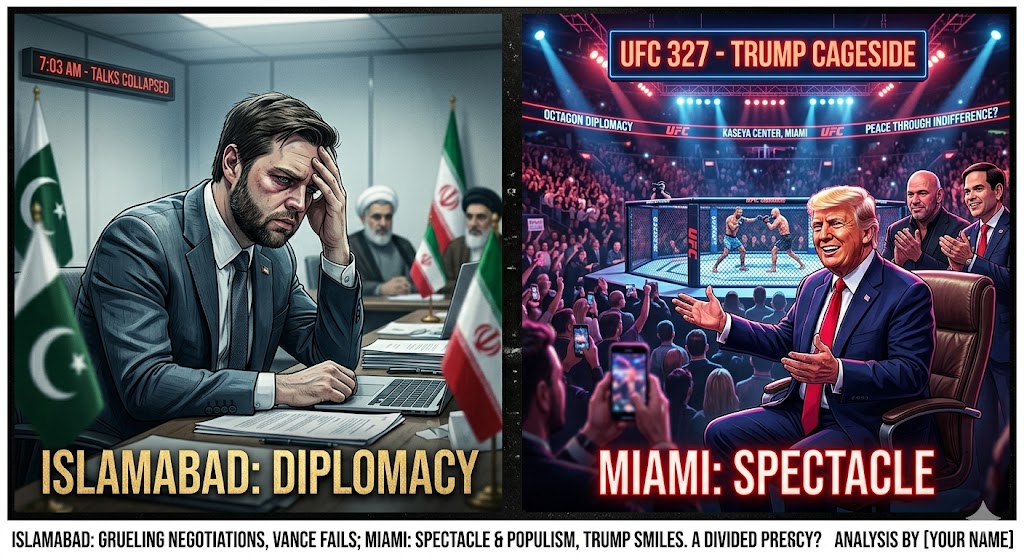
In contrast, President Trump was playing the role he has always preferred: the Ultimate Spectator. Flanked by UFC CEO Dana White and Secretary of State Marco Rubio, Trump engaged in what critics call “Octagon Diplomacy.” Rather than being seen grappling with the failure in Islamabad, the President was seen shaking hands with Joe Rogan and praising the sheer physical dominance of knockout winner Carlos Ulberg.
The Message in the Optics
To the administration’s supporters, this is not a sign of negligence, but of confidence. The narrative from the White House is clear: while the “Junior Partner” handles the tedious, unrewarding work of international bureaucracy, the President remains the symbol of American strength and normalcy. By attending a UFC event while a peace deal crumbled, Trump signaled to his domestic base—and perhaps to Tehran—that he is not desperate for a deal. It was a projection of “Peace Through Strength” (or perhaps “Peace Through Indifference”).
However, to the international community and traditionalists in Washington, the optics are disastrous. At a time when the world expects the American President to be in the Situation Room during a major diplomatic crisis, he was instead seen cheering for a bloodsport. This “Boxing Diplomacy” suggests an administration that views foreign policy not as a delicate web of alliances, but as a series of zero-sum cage matches where the only thing that matters is the final knockout.